Wholesale Truffle Oil Manufacturing Guide
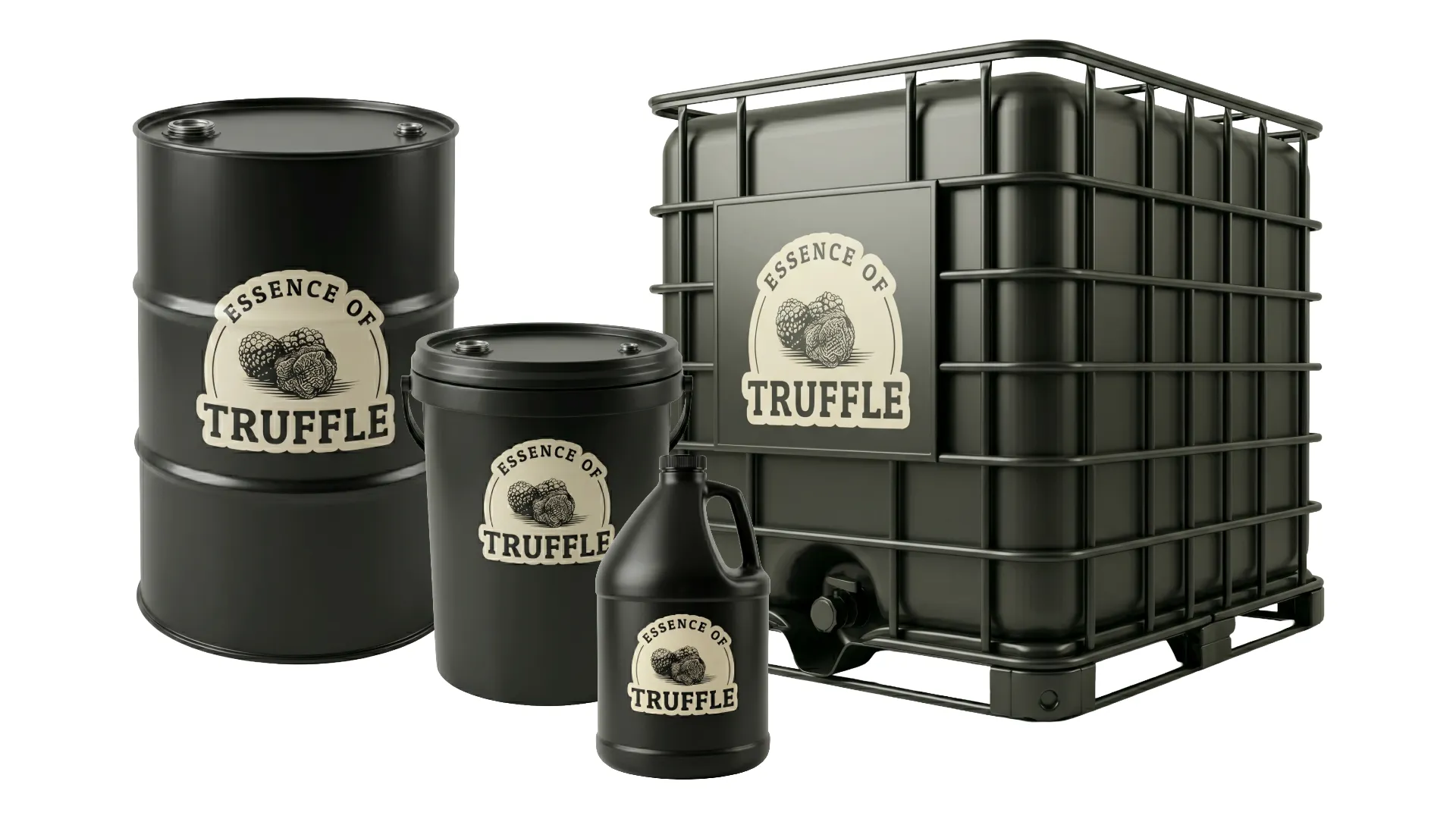
Truffle oil manufacturing at scale is one of the simplest production processes in the food industry when using Essence of Truffle concentrate. There’s no heat required, no emulsification process, and no complex equipment. Just a sanitized container, a neutral base oil, and a few minutes of mixing. Whether you’re producing 1-gallon test batches or 275-gallon tote runs for distribution, the process and dilution ratio stay exactly the same.
This guide covers everything you need for truffle oil manufacturing, from base oil selection and dilution rates to batch-by-batch instructions and storage best practices.
Looking for the full picture on truffle flavoring for industrial food processing? Start there for sizing, applications, and dosing.
Universal dilution rate: approximately 2 mL of truffle essence per liter of base oil, or about 7.6 mL per gallon. Adjust up or down based on desired intensity, staying within the 1 to 3 mL per liter range on our spec sheet.
Choosing Your Base Oil
Essence of Truffle concentrate is oil-soluble and compatible with virtually any neutral or semi-neutral base oil. Your choice of carrier oil will shape the flavor profile, shelf life, and target market of your finished product.
Extra virgin olive oil adds body and richness, ideal for premium retail and fine dining applications. Sunflower and canola oil are the workhorses of large-scale manufacturing: cost-efficient, widely available, and neutral enough to let the truffle aroma take center stage. Grapeseed oil delivers a cleaner finish with a higher smoke point, making it well-suited for culinary applications. Avocado oil is an emerging choice for brands targeting premium or specialty health-conscious markets.
For industrial production runs, sunflower or canola is the most practical default. The neutral flavor profile ensures consistent truffle aroma across every batch.
Why Use a Concentrate for Truffle Oil Manufacturing
Whole truffles introduce significant variables into truffle oil manufacturing: seasonal availability, inconsistent aroma intensity, high per-unit cost, and short shelf life after harvest. A super-concentrated extract eliminates all of these. Essence of Truffle is produced under GMP-compliant conditions with consistent aroma profiling across every lot, meaning your finished truffle oil will taste the same in January as it does in September, at a fraction of the cost per unit compared to whole truffle sourcing.
The concentrate is also clean label and vegan, requiring no allergen statement, which simplifies regulatory approval and broadens your addressable market.
Truffle Oil Manufacturing: Dilution Reference
| Batch Size | Neutral Oil | Truffle Essence |
|---|---|---|
| 1 Gallon | 3.8 L | 7.6 mL |
| 5 Gallons | 18.9 L | 37.9 mL |
| 55 Gallons | 208.2 L | 416 mL |
| 275 Gallons | 1,041 L | 2,082 mL |
Truffle Oil Manufacturing Recipes by Batch Size
1 Gallon
3.8 Liters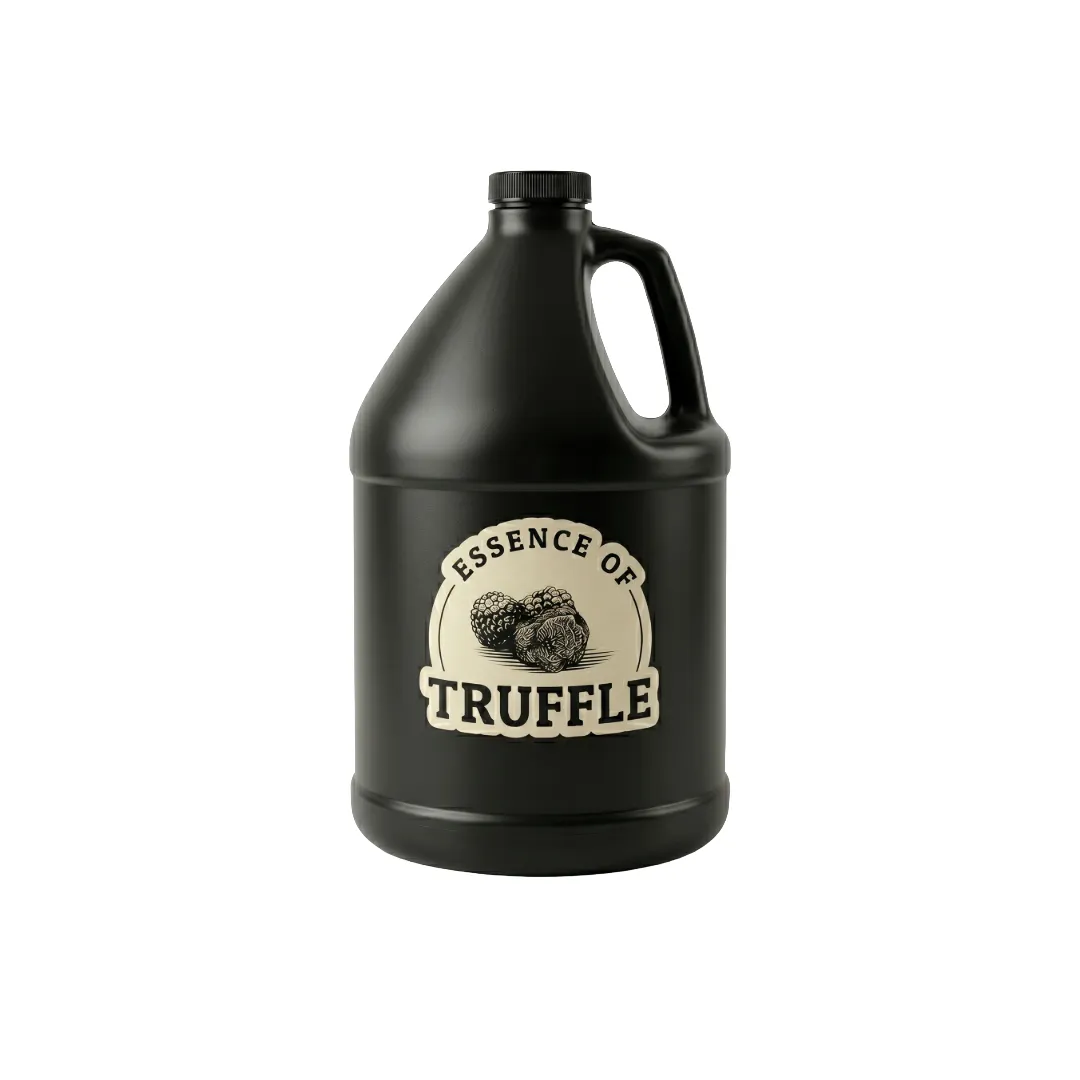
Ingredients
- Neutral Oil: 3.8 L / 128 oz
- Truffle Essence: 7.6 mL / 0.26 oz
Instructions
- Pour 3.8 liters of neutral oil into a sanitized container.
- Add 7.6 mL of truffle essence extract.
- Stir gently for 1 to 2 minutes.
- Store in a cool, dark place in an airtight container.
5 Gallons
18.9 Liters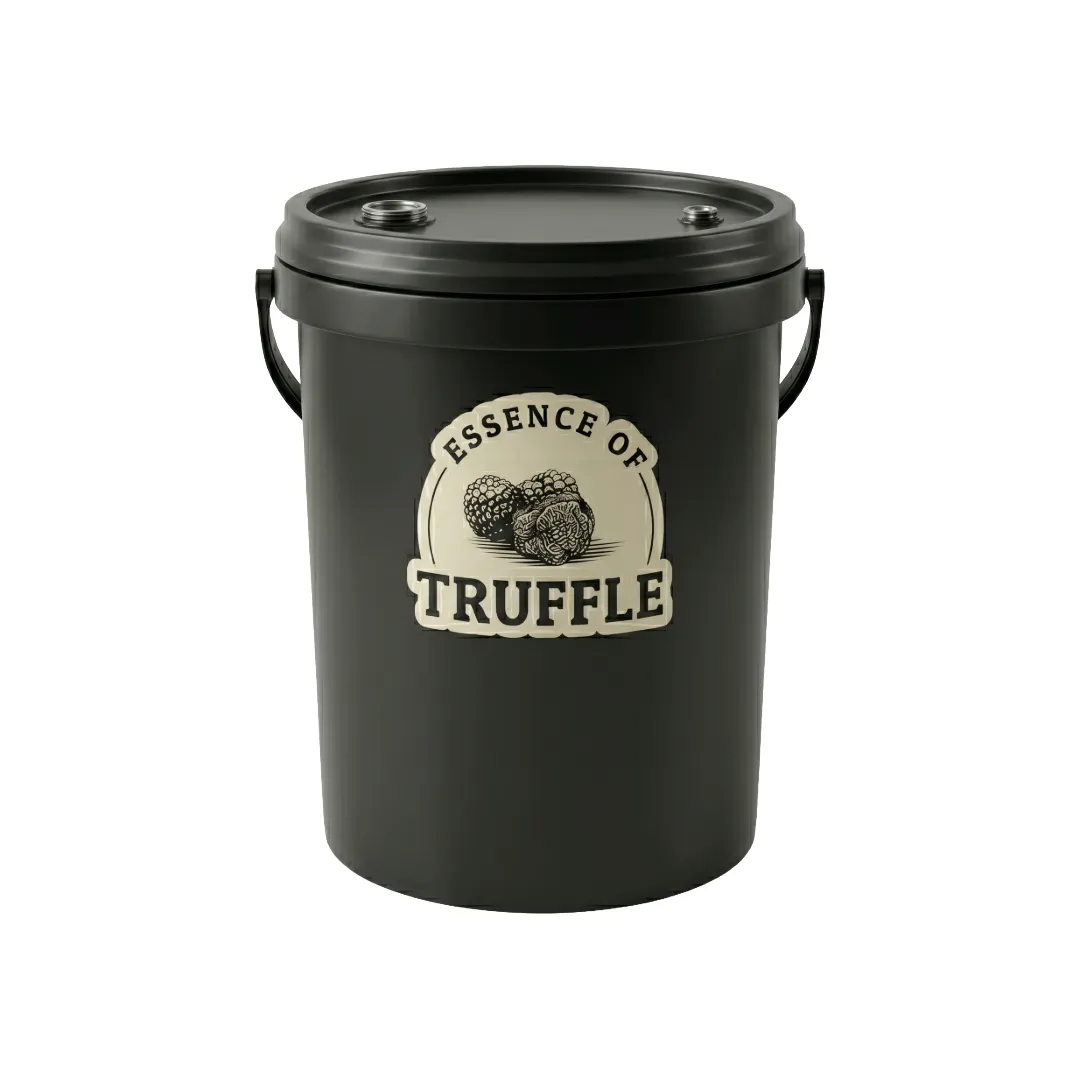
Ingredients
- Neutral Oil: 18.9 L / 640 oz
- Truffle Essence: 37.9 mL / 1.28 oz
Instructions
- Fill a food-grade container with 18.9 liters of neutral oil.
- Add 37.9 mL of truffle essence extract.
- Stir thoroughly with a sanitized mixing paddle for 3 to 5 minutes.
- Store or use directly in production.
55 Gallons
208.2 Liters
Ingredients
- Neutral Oil: 208.2 L / 7,040 oz
- Truffle Essence: 416 mL / 14.1 oz
Instructions
- In a food-safe drum, pour 208.2 liters of neutral oil.
- Add 416 mL of truffle essence extract.
- Mix with an industrial paddle mixer for 5 to 10 minutes.
- Seal and store in a temperature-controlled area.
275 Gallons
1,041 Liters
Ingredients
- Neutral Oil: 1,041 L / 35,200 oz
- Truffle Essence: 2,082 mL / 70.4 oz
Instructions
- Pour 1,041 liters of neutral oil into an industrial-sized mixing tank.
- Add 2,082 mL of truffle essence extract.
- Use a high-capacity industrial mixer to blend for 15 to 20 minutes.
- Transfer into bulk containers or smaller units for distribution.
Quality Control Tips for Truffle Oil Manufacturing
After blending, let the finished oil rest for 15 to 30 minutes before conducting a final aroma evaluation. The truffle scent should be clean, earthy, and pronounced, with no off-notes from the base oil. If intensity is lower than expected, confirm your dosage against the dilution table and check that the concentrate was fully incorporated before assessing.
For ongoing truffle oil manufacturing, keep a batch log that records base oil supplier, lot number, concentrate volume, blend date, and sensory evaluation results. This supports QA repeatability across shifts and simplifies traceability if any quality issue arises downstream.
Storage & Shelf Life
Proper storage is essential to protecting your truffle oil manufacturing output. Store finished truffle oil between 60 and 70°F (15 to 21°C) in dark glass or food-grade HDPE containers. Avoid clear plastic and direct sunlight, both accelerate oxidation and degrade the aromatic compounds. For high-volume production, label each batch with the production date, lot number, base oil used, and concentrate volume added for full traceability.
When stored correctly, truffle oil produced with Essence of Truffle concentrate maintains peak aroma for 12 to 18 months. Conduct a nose evaluation after blending and again after 30 days to confirm stability before committing to full distribution.
Ready to start truffle oil manufacturing at scale? Sizes from 5 mL samples to 32 oz bulk, with wholesale sizes up to 55-gallon drums on an approved wholesale account.
Shop Truffle Essence Contact for Wholesale
Recent Comments