What Is Truffle Essence? A Complete Guide to Truffle Flavor
Truffle essence is the concentrated aromatic compound that gives truffle oil, truffle butter, and truffle-flavored products their distinctive smell and taste. This guide covers what it is, how it is made, what truffle flavor actually tastes like, and how food manufacturers use it at scale.
What Is Truffle Essence?
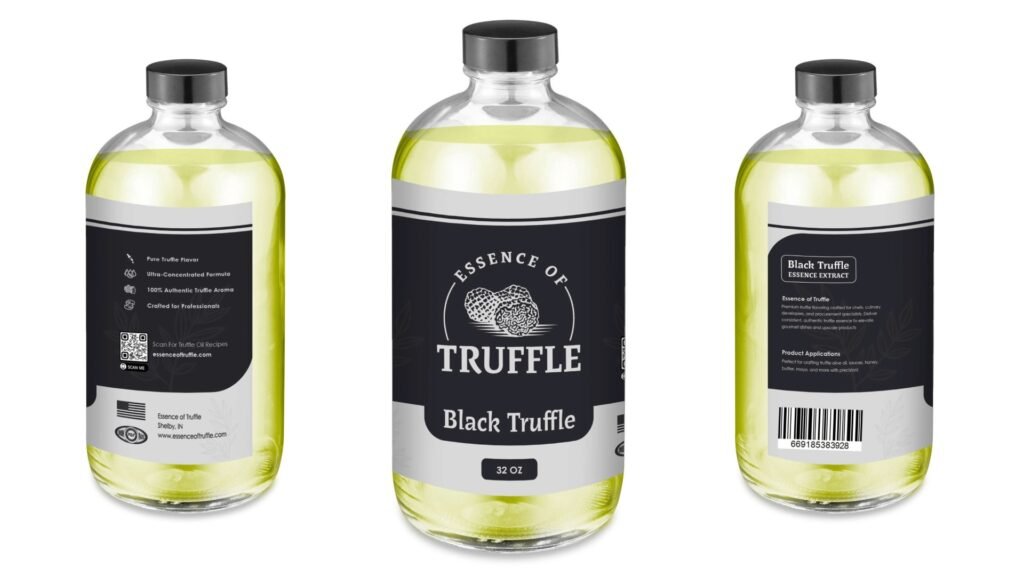
Truffle essence is a highly concentrated liquid extract that carries the aroma and flavor of truffles. It is the active aromatic component, supplied undiluted, and it is what most commercial truffle products are actually flavored with.
Fresh truffles are seasonal, expensive, and inconsistent. Aroma intensity varies by harvest, by region, and by how long the truffle sat before it reached the kitchen. Truffle essence removes those variables. It delivers the same aromatic character in every batch, year round, at a fraction of the cost per finished unit.
It is worth being precise about the difference between essence and oil. Truffle essence is the concentrate. Truffle oil is the finished product, made by diluting essence into a carrier oil. If you buy truffle oil, you are buying essence that someone else already diluted.
Key characteristics
- Highly concentrated. Typical inclusion is 1 to 3 mL per liter of carrier.
- Oil-soluble. Disperses cleanly into oils, fats, and dry carriers.
- Two profiles. Black truffle and white truffle, with meaningfully different flavor.
- Shelf stable. No refrigeration, no spoilage window.
- Cost-efficient. One bottle flavors hundreds of liters of finished product.
What Is in Truffle Oil?
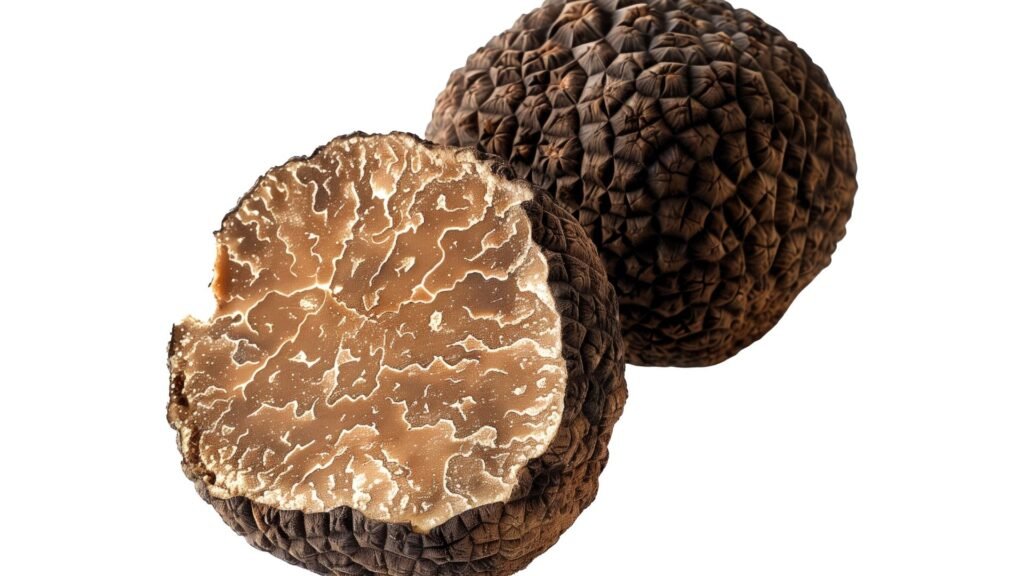
Most commercial truffle oil contains two things: a neutral base oil and a concentrated truffle aroma compound. It usually contains no actual truffle.
This surprises people, but it is standard practice across the industry and it is not a shortcut. Fresh truffle infused into oil produces a weak, unstable aroma that fades within weeks. The aromatic compounds in truffle are volatile and do not survive infusion at any meaningful strength.
The primary aromatic in most truffle oil is 2,4-dithiapentane, a sulfur-based organic compound that closely replicates the natural scent of truffle. It occurs naturally in truffles and is the dominant note your nose registers when you smell one.
A typical commercial truffle oil breaks down roughly like this:
| Component | Role | Typical Share |
|---|---|---|
| Base Oil | Carrier. Olive, sunflower, canola, or grapeseed. | 99%+ |
| Truffle Essence | The aromatic. Delivers all of the flavor and smell. | 0.1 to 0.3% |
| Truffle Pieces | Optional. Visual only, contributes little flavor. | 0 to 1% |
How Is Truffle Oil Made?
Truffle oil is made by measuring concentrated truffle essence into a neutral base oil and mixing. There is no heat, no emulsification, and no specialized equipment required.
The process is genuinely simple, which is why the quality difference between products comes down to the essence used and the dilution ratio, not the manufacturing method.
- Select the base oil. Neutral oils like sunflower and canola let the truffle aroma dominate. Olive oil adds its own character and body.
- Measure the essence. Roughly 1 to 3 mL per liter of oil, depending on target intensity.
- Combine and mix. Stir for one to two minutes at small scale, longer with an industrial paddle mixer at volume.
- Rest and evaluate. Let the oil sit 15 to 30 minutes, then assess aroma before packaging.
- Package and store. Dark glass or food-grade HDPE, away from light and heat.
Standard dilution: approximately 3 mL of truffle essence per gallon (3.8 L) of base oil. Adjust within the 1 to 3 mL per liter range based on how forward you want the truffle note.
For batch-by-batch instructions at production volume, see our wholesale truffle oil manufacturing guide.
What Does Truffle Flavor Taste Like?

Truffle flavor is earthy, savory, and sulfurous, with a strong aromatic component that registers more in the nose than on the tongue. It is closer to garlic and aged cheese than to mushroom.
Most of what people call truffle “taste” is actually smell. The compounds are volatile and travel to the olfactory receptors before they ever reach your palate. This is why truffle products smell powerful but taste comparatively subtle, and why truffle flavor fades quickly under heat.
The two commercial profiles are meaningfully different, and choosing the wrong one is the most common mistake in product development.
Black Truffle
Earthy, roasted, deep. Rounder and more savory, with notes closer to dark chocolate and forest floor.
Holds up well against strong bases: red meat, mushroom sauces, aged cheese, heavy cream, and acidic products like mustard.
White Truffle
Sharp, garlicky, bright. More pungent and more immediately recognizable, with a pronounced allium character.
Better in delicate applications: pasta, eggs, seafood, risotto, potato, and anything where you want the truffle forward rather than in the background.
Truffle Essence vs. Truffle Oil
These get used interchangeably, but they are not the same thing and the difference matters for anyone buying at volume.
| Factor | Truffle Essence | Truffle Oil |
|---|---|---|
| What It Is | Undiluted concentrated extract | Essence already diluted into carrier oil |
| Strength | Highly concentrated, dosed in mL per liter | Ready to use, no further dilution |
| Primary Use | Food manufacturing and formulation | Finishing oil, retail and food service |
| Shelf Life | Longer, due to concentration | Shorter, degrades with the carrier oil |
| Cost at Volume | Far lower per finished unit | Higher, you are paying to ship oil |
| Dosing Control | Full control over intensity | Fixed at whatever the producer chose |
For manufacturing, essence wins on every axis that matters. You control the ratio, you control the carrier, and you are not paying freight on oil you could buy locally.
Truffle Ingredients for Food Businesses
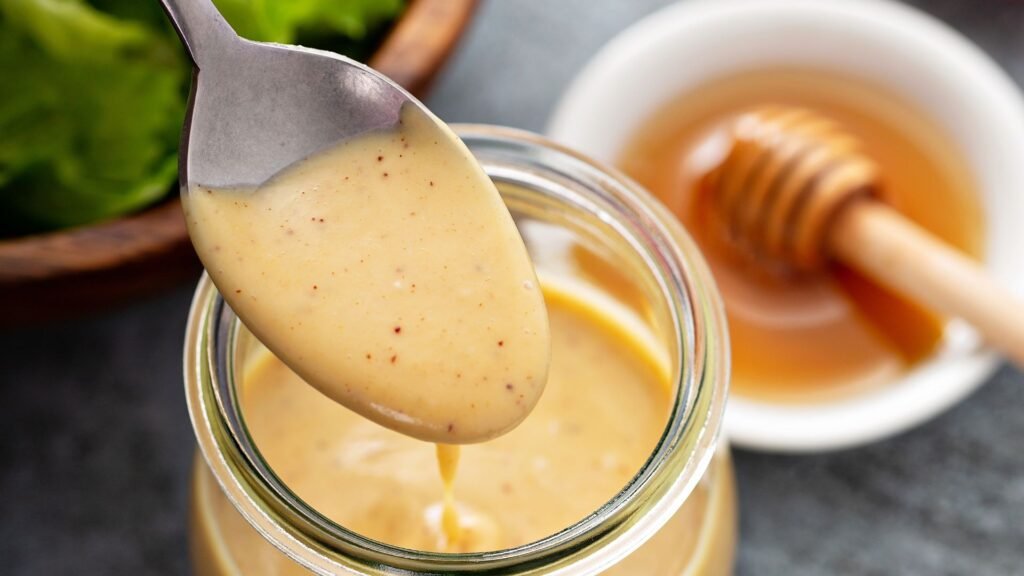
If you are formulating a product rather than finishing a dish, the requirements change. Consistency, documentation, and dosing control matter more than anything else.
What to specify
- Oil solubility. Required for plating onto dry carriers and incorporating into fats.
- Documented inclusion rate. A supplier who cannot tell you mL per liter cannot support a production spec.
- Spec sheet and COA. Your QA team will require both before approval.
- Clean label compatibility. No allergen statement simplifies regulatory review and widens your market.
- Bulk availability. Running out mid-production is worse than paying slightly more per unit.
Common production applications
- Dry seasonings and rubs. Atomized onto salt, maltodextrin, or nutritional yeast via ribbon blender.
- Butter and dairy. Incorporated during the whipping phase at controlled temperature.
- Cheese. Added at the correct production phase for even distribution through the curd.
- Sauces and condiments. Mustard, mayonnaise, aioli, pasta sauce.
- Snack coatings. Diluted into carrier oil, then tumbled onto warm chips or nuts.
- Bulk truffle oil. Produced at volume for retail or food service distribution.
For dosing ratios, applications, and full manufacturing SOPs, see our guide to truffle flavoring for industrial food processing.
How to Choose a Truffle Essence
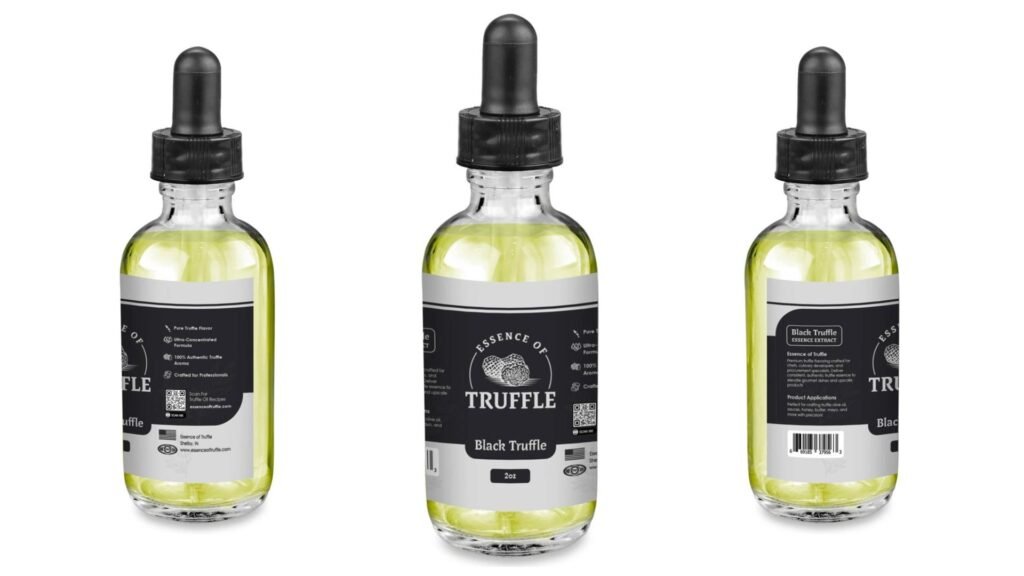
Not every extract is equivalent. Four things separate a usable product from one that will cause you problems downstream.
1. Profile match
Black or white, chosen against your base rather than by preference. Most producers spec one, run a batch, and discover they needed the other.
2. Concentration
Higher concentration means less product per finished unit and lower cost at volume. It also means tighter dosing control, since you are working in milliliters rather than fractions of a liter.
3. Aromatic complexity
A well-made extract reads as truffle. A poor one reads as sulfur. The difference is noticeable immediately and it does not improve in the finished product.
4. Supplier documentation
Spec sheet, COA, consistent lot-to-lot aroma profiling, and the ability to supply at the volume you will need in twelve months.
Frequently Asked Questions
Is truffle oil made from real truffles?
Most commercial truffle oil is not. It is made with a concentrated aroma compound, typically 2,4-dithiapentane, in a neutral base oil. That compound occurs naturally in truffles, but the oil itself usually contains no truffle material.
Where does truffle flavor come from?
From volatile sulfur compounds produced by the truffle fungus. These are what you smell, and they are the same compounds replicated in concentrated extract.
Does truffle essence contain actual truffle?
It depends on the product. Some extracts include natural truffle components, others use nature-identical aromatic compounds, and many combine both. Ask your supplier for the spec sheet.
How much truffle essence per liter?
1 to 3 mL per liter of carrier oil or finished product. Start at 2 mL and adjust from there based on your bench test.
Does truffle flavor survive cooking?
Partially. The aromatics are volatile, so extended high heat drives them off. For most applications, add the truffle component late in the process or after heat.
Black or white truffle, which should I use?
Black for heavier, savory, acidic, or meat-forward products. White for delicate bases where you want the truffle forward. If you are unsure, test both before committing to a formulation.
Test Both Profiles First
Black runs earthy and roasted. White runs sharp and garlicky. Most producers spec the wrong one before they test. Order either 5 ML sample and we add the other profile free, with free US shipping.
Order Samples For Manufacturers
Recent Comments